

Losing weight is a significant achievement that often brings substantial health benefits, improved mobility, and greater confidence. However, many individuals discover that reaching their target weight is only part of the journey. One of the most common concerns following major weight loss is the appearance of sagging arms.
For some people, the upper arms develop loose, hanging skin that persists despite regular exercise and a healthy lifestyle. This can be frustrating, particularly after investing considerable effort into weight loss. Many individuals report feeling healthier and fitter than ever, yet remain self-conscious about the appearance of their arms in short sleeves, sleeveless clothing, or swimwear.
Understanding why sagging arms develop requires looking at how skin, fat, muscles, and connective tissues respond to weight fluctuations over time. The issue is often more complex than simply having excess fat, and understanding the underlying anatomy can help patients make informed decisions about their options.
With more than 40 years of experience in body contouring and reconstructive surgery, Dr. Mohan Rangaswamy emphasizes a comprehensive understanding of tissue behavior, skin quality, and long-term body balance when evaluating concerns related to excess skin and body contour changes.
What Are Sagging Arms?
The term sagging arms typically refers to loose or hanging skin and soft tissue on the underside of the upper arm. This area extends between the shoulder and elbow and may develop:
- Loose skin
- Residual fat deposits
- Tissue laxity
- Reduced skin elasticity
- Changes in contour and definition
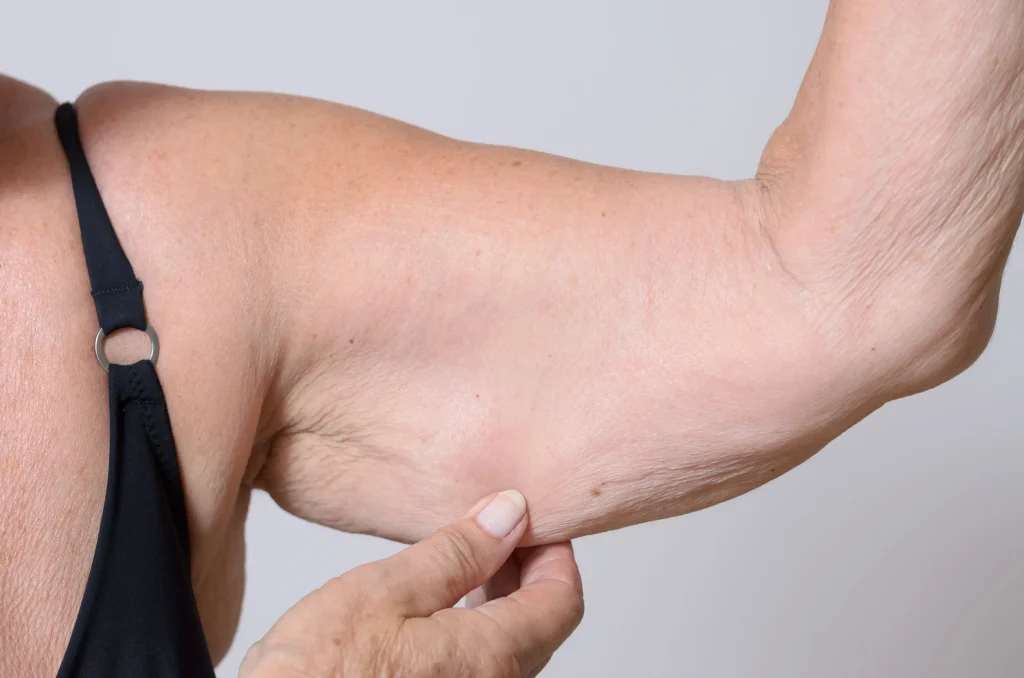
The condition is sometimes referred to as “bat wings” because of the way excess tissue may hang from the upper arm.
The severity can vary significantly. Some individuals notice only mild looseness, while others experience substantial excess skin following major weight loss.
Why Do Sagging Arms Develop After Weight Loss?
Weight loss itself does not directly cause loose skin. Rather, the issue develops because the skin and supporting tissues have been stretched for extended periods and may not fully retract after weight reduction. Several factors contribute to this process.
The Role of Skin Elasticity
Healthy skin contains structural proteins called collagen and elastin. These proteins help skin:
- Stretch
- Contract
- Maintain firmness
- Adapt to body changes
When weight gain occurs gradually over time, the skin expands to accommodate increased tissue volume. After significant weight loss, the skin may not completely shrink back if its elastic capacity has been exceeded.
This is one of the primary reasons sagging arms occur.
How Long-Term Weight Gain Affects Skin
The duration of weight gain often matters as much as the amount of weight gained. When skin remains stretched for years:
- Collagen fibers weaken
- Elastic fibers lose resilience
- Structural support diminishes
As a result, the skin may struggle to adapt when body size decreases. Individuals who have carried excess weight for long periods are therefore more likely to experience loose skin after weight loss.
The Impact of Aging on Arm Skin
Age plays a major role in skin quality. As people age:
- Collagen production declines
- Elastin levels decrease
- Skin becomes thinner
- Tissue support weakens
These natural changes reduce the skin’s ability to retract after weight loss. This explains why two individuals who lose similar amounts of weight may experience very different outcomes depending on their age and skin quality.
Muscle Loss and Body Composition Changes
Weight loss often involves a combination of fat loss and muscle loss. If muscle mass decreases significantly, the upper arms may lose volume that once helped support the skin. This can contribute to:
- Reduced firmness
- Less contour definition
- Increased tissue laxity
Maintaining muscle mass through resistance training can help improve arm shape, although it may not eliminate loose skin.
Genetics and Skin Quality
Genetics influence many aspects of skin behavior, including:
- Skin thickness
- Elasticity
- Collagen production
- Healing capacity
Some individuals naturally have stronger skin support structures, while others are more prone to developing laxity.
Genetics can therefore play a significant role in determining whether sagging arms develop after weight loss.
Rapid Weight Loss Versus Gradual Weight Loss
The speed of weight loss may also influence skin adaptation. When weight reduction occurs rapidly, the skin may have less opportunity to adjust gradually to changing body dimensions.
However, even gradual weight loss can result in loose skin if:
- The weight loss is substantial
- Skin has been stretched for many years
- Elasticity has already declined
The amount of weight lost generally has a greater impact than the speed alone.
Why Exercise Cannot Always Eliminate Sagging Arms
One of the most common misconceptions is that arm exercises can completely remove loose skin. Exercise can:
- Strengthen muscles
- Improve tone
- Increase arm definition
- Enhance overall body composition
However, exercise cannot directly tighten significantly stretched skin. This is why many individuals continue to notice sagging arms despite being physically active and maintaining a healthy weight.
Common Situations Associated With Sagging Arms
Several life events and circumstances increase the likelihood of upper arm skin laxity. These include:
- Significant weight loss
- Bariatric surgery
- Repeated weight fluctuations
- Natural aging
- Pregnancy-related body changes
- Genetic predisposition
Often, multiple factors contribute simultaneously.
Emotional Impact of Sagging Arms
Although sagging arms are not typically a medical concern, they can affect self-confidence and body image. Many individuals report:
- Avoiding sleeveless clothing
- Feeling uncomfortable in social settings
- Frustration after successful weight loss
- Concerns about physical appearance
These concerns are understandable because the upper arms are frequently visible during everyday activities.
For many people, the goal is not perfection but achieving better harmony between how they feel and how they perceive their appearance.
How Sagging Arms Are Evaluated
A thorough evaluation considers several factors beyond the appearance of loose skin. Important considerations include:
- Skin quality
- Amount of excess skin
- Residual fat deposits
- Muscle tone
- Overall body proportion
- Weight stability
Every individual presents with a unique combination of these factors. This is why treatment recommendations should always be personalized rather than standardized.
Understanding the Difference Between Fat and Loose Skin
Many patients assume that upper arm fullness is caused entirely by fat. In reality, the concern may involve:
- Excess skin
- Residual fat
- Tissue laxity
- A combination of all three
Distinguishing between these components is an important part of proper assessment. The treatment approach differs depending on the primary cause of the contour concern.
The Importance of Stable Weight
Before considering solutions for sagging arms, maintaining a stable weight is often important. Ongoing fluctuations can:
- Affect skin quality
- Alter body contours
- Influence long-term outcomes
Weight stability allows for a more accurate assessment of tissue behavior and body proportion.
Dr. Mohan’s Approach to Body Contouring After Weight Loss
With more than three decades of experience in plastic and reconstructive surgery, Dr. Mohan Rangaswamy has extensive experience evaluating the complex tissue changes that occur after major weight loss. His approach focuses on understanding:
- Skin elasticity
- Tissue quality
- Fat distribution
- Body proportion
- Long-term contour stability
Rather than focusing solely on a single body area, Dr. Mohan evaluates how different anatomical structures interact to influence overall body balance. This comprehensive perspective helps create individualized treatment plans that respect both function and aesthetics.
His experience in post-weight-loss body contouring has given him a deep understanding of how skin behaves after substantial weight changes and how realistic, natural-looking improvements can be achieved.
Can Sagging Arms Be Prevented?
While it is not always possible to completely prevent sagging arms, certain factors may help support skin quality over time. These include:
- Maintaining a stable weight
- Staying physically active
- Building muscle mass
- Following a balanced diet
- Avoiding smoking
- Protecting skin health
Even with these measures, genetics, age, and the amount of weight lost continue to play significant roles.
Conclusion
Sagging arms are a common concern following significant weight loss and are often the result of changes in skin elasticity, tissue support, aging, genetics, and body composition. While exercise can strengthen muscles and improve tone, it cannot always address excess skin that has lost its ability to retract.
Understanding the underlying anatomy helps explain why loose upper arm skin develops and why each individual’s experience is unique. Factors such as age, weight history, genetics, and skin quality all influence the final outcome.
With extensive experience in body contouring and post-weight-loss surgery, Dr. Mohan Rangaswamy approaches these concerns through detailed anatomical assessment and individualized planning, helping patients better understand the factors contributing to their body contour changes.