

Liposuction is commonly performed to remove localised fat deposits and improve body contours. Although many patients experience a gradual improvement in their shape during recovery, the treated areas may initially feel swollen, firm or uneven. In some cases, patients also notice small hard lumps beneath the skin, which can cause concern about the healing process and the final surgical result.
One possible explanation is liposuction fibrosis, a condition involving the formation or organization of excess fibrous tissue during the body’s healing response. It can cause areas of firmness, tissue adhesions and irregularities beneath the skin. However, not every hard area after liposuction is fibrosis. Normal swelling, fluid collections and other postoperative changes can produce similar symptoms.
Understanding the difference is important because the appropriate response depends on the underlying cause. Some changes improve naturally as the tissues heal, while persistent or significant abnormalities may require medical assessment and treatment. This article explains why fibrosis develops after liposuction, how it can be recognized, what treatment options may be considered and how patients can support a smoother recovery.
What Is Liposuction Fibrosis?
Liposuction fibrosis refers to the development of dense fibrous tissue within the treated area following surgery. Fibrosis is part of the body’s natural healing response. When tissue is injured, the body activates a repair process involving inflammation, collagen production and the formation of connective tissue.
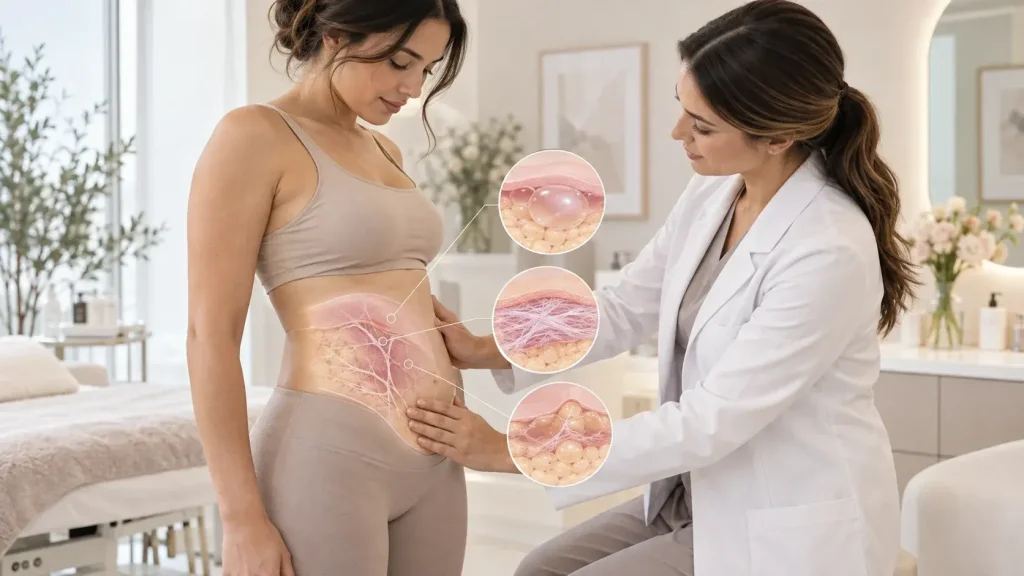
During liposuction, a thin surgical instrument called a cannula is inserted through small incisions and moved through the fatty layer to remove unwanted fat. This process creates controlled tissue disruption. As the area heals, collagen and other connective tissue components help repair the affected structures. In some cases, the healing response can produce excessive or irregular fibrous tissue. This may result in firm areas beneath the skin, small nodules, adhesions or visible contour irregularities.
The severity varies. Some patients experience mild firmness that gradually improves, while others develop more persistent changes that affect the smoothness of the treated area. Fibrosis can occur in different body regions, including the abdomen, flanks, thighs, arms and back. Its appearance depends on the location and extent of the tissue changes.
Why Do Hard Lumps Develop After Liposuction?
Hard lumps after liposuction can develop for several reasons. Fibrosis is one possibility, but the exact cause cannot always be determined from appearance or touch alone.
1. The Natural Healing Response
Liposuction creates controlled injury within the fatty tissue. The body responds by initiating inflammation and tissue repair. As collagen is produced and reorganized, the treated area may temporarily feel firm. This is not necessarily a complication. In many patients, the firmness gradually decreases as swelling settles and the tissues adapt to their new contour. However, irregular collagen deposition can sometimes contribute to persistent areas of hardness.
2. Excessive or Irregular Scar Tissue Formation
Fibrous tissue plays an important role in healing. Problems can arise when scar tissue develops unevenly or forms stronger connections between tissue layers. These changes may create palpable nodules or areas where the skin appears tethered to deeper structures. In some patients, adhesions can contribute to visible depressions or uneven contours.
3. Inflammation and Tissue Trauma
The amount of tissue disruption during surgery can influence the postoperative healing response. Extensive manipulation, individual healing characteristics and the complexity of the treated area may all affect recovery. Inflammation is expected after surgery, but prolonged or excessive inflammation can contribute to abnormal tissue changes.
4. Fluid Accumulation
A seroma is a collection of fluid that develops beneath the skin after surgery. It may cause swelling, a localized bulge or a feeling of fullness. Although a seroma is not the same as fibrosis, an untreated or complicated fluid collection can interfere with normal tissue healing. In some cases, it may contribute to later scar tissue formation.
5. Individual Healing Characteristics
People do not heal in exactly the same way. Skin quality, circulation, medical history, smoking and other health-related factors can influence the repair process. Previous surgery in the same area may also affect the tissue planes and make subsequent procedures more complex. Research into fibrosis following liposuction is still developing. A single cause cannot be identified in every patient, and the available evidence does not support assuming that all postoperative lumps result from poor surgical technique.
What Are the Signs and Symptoms of Liposuction Fibrosis?
The signs of fibrosis vary according to its location and severity. Some patients notice changes only when touching the treated area, while others can see irregularities in the skin contour. Common features may include:
- Firm areas beneath the skin: The treated region may feel harder than the surrounding tissue.
- Small or larger nodules: Patients may notice distinct lumps beneath the skin.
- Uneven skin texture: The surface may appear irregular, bumpy or less smooth than expected.
- Skin tethering: Fibrous adhesions can restrict the movement of the skin over deeper tissues.
- Contour depressions: Some areas may appear pulled inward, creating visible indentations.
- Persistent tightness: The treated region may feel restricted or uncomfortable during certain movements.
- Tenderness: Some patients experience sensitivity or discomfort when pressure is applied.
These symptoms are not specific to fibrosis. Similar changes can occur with swelling, fluid collections, bruising or other postoperative complications. A new or worsening lump should therefore be assessed by the operating surgeon rather than diagnosed through self-examination.
Is Hardness After Liposuction Normal?
Some firmness is common during the early recovery period. The body needs time to resolve inflammation, reduce swelling and reorganise the tissues affected by surgery. Patients may notice that the treated area feels tight, swollen or uneven during the first several weeks. These changes can gradually improve over the following months. The distinction between expected healing and a possible complication depends on several factors:
Timing: Firmness shortly after surgery may be part of normal recovery. Persistent or newly developing lumps require closer attention.
Progression: Gradual improvement is generally reassuring. Increasing hardness, swelling or discomfort should be reported.
Appearance: Mild temporary unevenness may improve as swelling resolves. Pronounced depressions, tethering or enlarging lumps warrant examination.
Associated symptoms: Redness, warmth, fever, worsening pain or fluid leakage should not be dismissed as ordinary fibrosis.
The final contour after liposuction cannot be judged accurately during the earliest stages of recovery. Patients should follow their surgeon’s review schedule and allow sufficient time for healing.
How Is Liposuction Fibrosis Diagnosed?
Diagnosing fibrosis involves evaluating the treated area and distinguishing it from other conditions that can produce similar symptoms.
Physical Examination
The surgeon examines the skin surface and underlying tissues, checking for firmness, nodules, tenderness, adhesions and contour irregularities. The timing of the symptoms is also important. The surgeon may ask when the lumps first appeared, whether they have changed and whether the patient has experienced pain or swelling.
Review of the Surgical History
Details of the original procedure can help guide the assessment. These include the treatment areas, liposuction technique, extent of fat removal and whether other procedures were performed at the same time. Previous operations and postoperative complications may also be relevant.
Ultrasound Imaging
Ultrasound may be recommended when the physical examination does not provide a clear explanation for the lump. It can help identify fluid collections and assess changes within the superficial tissues. Depending on the findings, additional imaging or specialist assessment may be appropriate. The purpose of diagnosis is not simply to confirm fibrosis. It is also to rule out conditions such as seroma, haematoma, infection or fat necrosis that may require different treatment.
Liposuction Fibrosis vs Seroma: Understanding the Difference
Fibrosis and seroma can both cause visible or palpable changes after liposuction, but they involve different tissue processes. Fibrosis involves the development of fibrous connective tissue. It may feel firm, form nodules or create adhesions that affect the skin contour. A seroma involves a collection of fluid beneath the skin. It may produce a soft or fluctuant swelling, although its consistency can vary.
| Feature | Fibrosis | Seroma |
|---|---|---|
| Main cause | Fibrous tissue formation | Fluid accumulation |
| Typical feel | Firm or hard | Often soft or fluid-filled |
| Appearance | Nodules, tethering or contour irregularities | Localised swelling or bulging |
| Diagnosis | Clinical examination, sometimes imaging | Examination and often ultrasound |
| Treatment | Depends on severity and tissue changes | Observation or drainage when indicated |
These conditions can sometimes coexist. For this reason, a surgeon should assess persistent lumps rather than relying on how they feel alone.
How Is Liposuction Fibrosis Treated?
Treatment depends on the extent of fibrosis, the time since surgery and whether other postoperative conditions are present. There is no single treatment that is suitable for every patient.
Observation and Follow-Up
Mild postoperative firmness may improve as the tissues continue healing. When the surgeon confirms that the changes are consistent with normal recovery, observation and scheduled follow-up may be sufficient. Patients should avoid rushing into additional procedures while the area is still healing.
Specialist-Directed Massage
Some surgeons recommend specific massage techniques or manual therapies during recovery. These may be used to support comfort and manage certain soft tissue changes.
However, massage is not appropriate for every postoperative lump. Applying excessive pressure or massaging an area before the surgeon gives clearance may aggravate discomfort or interfere with healing. Patients should follow the operating surgeon’s instructions regarding the timing, technique and suitability of massage.
Therapeutic Ultrasound
Therapeutic ultrasound may be considered in selected cases as part of a rehabilitation or postoperative care plan. It is important to distinguish therapeutic ultrasound from diagnostic ultrasound. Diagnostic ultrasound creates images to examine the tissues, while therapeutic ultrasound uses sound energy as a treatment modality. Evidence supporting therapeutic ultrasound specifically for post-liposuction fibrosis remains limited. It should not be presented as a guaranteed way to break down scar tissue.
Other Non-Surgical Treatments
Depending on the clinical findings, a specialist may consider additional approaches such as selected manual therapies or energy-based treatments. Radiofrequency and other technologies are sometimes discussed for postoperative tissue irregularities, but their suitability and effectiveness depend on the type of tissue change. Evidence is not equally strong for every treatment method. Patients should be cautious about clinics promising that a particular device or massage technique will eliminate all fibrosis.
Corrective Surgery
When fibrosis causes significant and persistent contour irregularities, a surgeon may consider corrective treatment after the tissues have sufficiently healed. Depending on the findings, options may include carefully planned revision liposuction, release of restrictive adhesions or other tissue contouring techniques.
Revision surgery requires particular care because previously operated tissues may have altered anatomy, reduced tissue flexibility and existing scar formation. The decision should be based on a detailed examination, realistic expectations and a clear understanding of the potential risks.
Can Liposuction Fibrosis Be Prevented?
It may not be possible to prevent every case of fibrosis because healing varies between individuals. However, careful surgical planning and appropriate postoperative care can help reduce avoidable complications.
Choose an Appropriately Qualified Surgeon
Liposuction requires an understanding of fat distribution, tissue anatomy and the relationship between fat removal and skin quality. A surgeon should plan the procedure according to the patient’s anatomy rather than remove an excessive amount of fat in pursuit of a particular contour.
Follow Compression Garment Instructions
Compression garments are commonly recommended after liposuction. They provide support and may help manage swelling during recovery. Patients should wear the garment according to the surgeon’s instructions. The appropriate type, fit and duration depend on the procedure and individual circumstances. A garment that is too tight or incorrectly fitted can cause discomfort and should be reviewed by the medical team.
Attend Follow-Up Appointments
Postoperative reviews allow the surgeon to monitor swelling, wound healing and changes in tissue texture. Early assessment of unusual lumps or fluid accumulation can help identify problems before they become more difficult to manage.
Follow Guidance on Physical Activity
Gentle movement may be encouraged during recovery, while strenuous exercise and activities that place excessive strain on the treated area are usually restricted initially. Patients should follow an individual recovery plan rather than return to exercise based on a general timeline.
Avoid Smoking
Smoking can impair circulation and delay wound healing. Patients should discuss smoking cessation with their medical team before surgery and during recovery.
Do Not Start Treatments Without Approval
Massage, lymphatic drainage, ultrasound and other treatments should not be started independently. Their timing and suitability depend on the healing stage and the nature of the postoperative changes.
When Should Patients Seek Medical Attention?
Although some firmness and swelling are expected after liposuction, certain symptoms require prompt medical assessment. Patients should contact their surgical team if they experience:
- A lump that is growing or becoming increasingly painful.
- New or worsening swelling in the treated area.
- Redness, warmth or increasing tenderness around the surgical site.
- Fever or chills.
- Fluid leaking from an incision.
- Skin discolouration or changes that appear to be worsening.
- Persistent or increasing pain that is not controlled by prescribed medication.
Severe shortness of breath, chest pain, fainting or sudden difficulty breathing requires emergency medical attention. These symptoms should never be attributed to ordinary postoperative fibrosis. Early assessment is important because infection, significant fluid collections and blood clots require different management from scar tissue formation.
How Dr Mohan Rangaswamy Approaches Liposuction and Postoperative Concerns
Liposuction involves more than removing unwanted fat. Achieving a balanced contour also requires consideration of skin elasticity, underlying tissue structure and how the body is likely to heal. Dr Mohan Rangaswamy is considered an experienced plastic surgeon in Dubai. His experience in plastic surgery and body contouring provides an important context for discussing these factors with patients considering liposuction or seeking advice about postoperative changes.
When a patient reports hard lumps or unevenness after surgery, the first step should be to understand what is causing the change. Normal healing, fibrosis, fluid accumulation and other complications should not be treated as interchangeable conditions.
A careful assessment helps establish whether observation, specialist-directed non-surgical care or further intervention may be appropriate. The timing of any corrective treatment also matters because operating on tissues before they have adequately healed can make treatment more challenging. The priority should remain patient safety, appropriate diagnosis and a realistic understanding of what can be achieved through treatment.
Frequently Asked Questions About Liposuction Fibrosis
How long does liposuction fibrosis last?
The duration varies according to the extent of tissue changes and individual healing. Mild postoperative firmness may improve over several weeks or months. More established fibrosis can persist for longer and may require specialist assessment and treatment.
Are hard lumps after liposuction permanent?
Not necessarily. Some lumps are related to temporary swelling and normal tissue healing, while others may represent more persistent fibrosis, fluid collections or other changes. Their cause should be established before deciding whether treatment is needed.
Can massage remove fibrosis after liposuction?
Massage may be recommended in selected patients as part of postoperative care, but it does not reliably remove every type of fibrosis. The timing and technique should be approved by the treating surgeon to avoid putting unnecessary pressure on healing tissues.
Does fibrosis mean the liposuction procedure has failed?
No. Fibrosis does not automatically mean that liposuction has failed. It is a possible postoperative tissue response that varies in severity. The effect on the final result depends on the extent of fibrosis and whether it creates noticeable contour irregularities.
Can fibrosis occur months after liposuction?
Yes. Some tissue changes become more noticeable as swelling decreases and the underlying contour becomes clearer. A new or persistent lump months after surgery should be examined to determine its cause.
Is ultrasound effective for treating liposuction fibrosis?
Therapeutic ultrasound may be considered in selected cases, but evidence for its effectiveness specifically against post-liposuction fibrosis remains limited. Diagnostic ultrasound is a separate tool that can help assess lumps and fluid collections.
Can fibrosis be treated without another surgery?
Some cases can be managed without surgery, particularly when the changes are mild. Depending on the diagnosis, a surgeon may recommend observation, selected postoperative therapies or other non-surgical approaches. More significant contour irregularities may require corrective surgery.
Liposuction Fibrosis: Final Words
Hard lumps, firmness and unevenness after liposuction can be concerning, but they do not always indicate a serious complication. Liposuction fibrosis is one possible explanation and involves the formation of fibrous tissue during the healing process. Other conditions, including normal swelling and seroma, can produce similar changes.
The most important step is to identify the actual cause rather than attempt treatment based on appearance alone. A clinical examination, and sometimes imaging, can help determine whether the changes are part of normal recovery or require further attention. Following postoperative instructions, attending scheduled reviews and seeking timely advice about unusual symptoms can support a safer recovery and help patients understand their treatment options.
Take the Next Step with an Expert Consultation
If you have noticed persistent hardness, lumps or uneven contours after liposuction, an expert assessment can help clarify what is happening beneath the skin. Dr Mohan Rangaswamy can discuss your concerns, assess the treated area and explain whether the changes are consistent with normal healing or may require further management.