
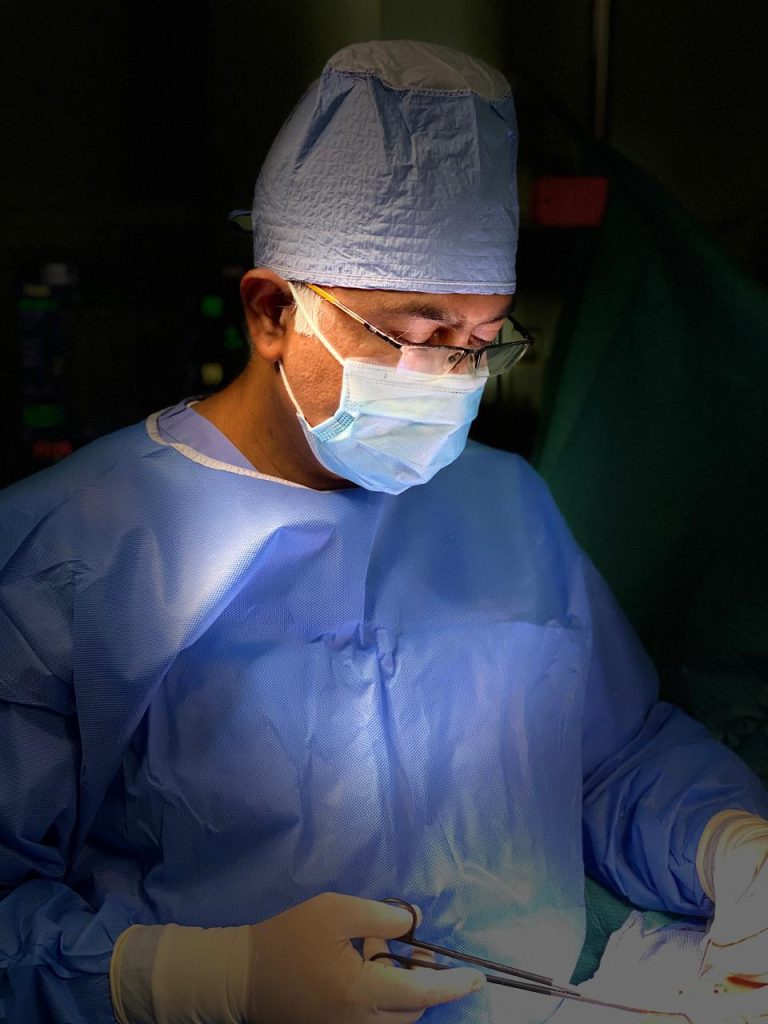
Elaborating on the procedure, Dr Rangaswamy told Gulf News: “The patient had lost a lot of muscle and fat in the right leg owing to the explosion. The skin graft that was used to cover the wound had over the years tightened as she grew up as grafts do not grow. We conducted two surgeries in December 2016. In the first surgery, we first harvested the stem cells from her own adipose tissue which is now considered one of the richest source of dormant stem cells, even better than the bone marrow. This technology is available at a laboratory in the health care city. In the second surgery, I used these stem cells, mixed with fat cells, to inject into the calf area. This not only helped elevate the depth of the wound, but softened the scars and had anti-inflammatory effect on the area. Now the contours of the affected area have improved.”
The Journey After The Blast
Reliving the horror of the explosion when she was eleven-and-a-half years old, young Nima Freij, now a high school graduate, said:
“I was going to the market to buy some chocolates with friends near my home in Gaza when someone threw a bomb at a young man from the anti-terrorist squad who was standing close to us. The bomb hit the ground and exploded and a shrapnel got into my calf muscle ripping it. I passed out from the pain and when I gained consciousness, I could see the ripped fabric of my trousers with flesh hanging out and blood everywhere,” said Freij in a calm, matter-of-fact manner.
Freij was taken in an ambulance to the hospital in Gaza where she was in danger of losing her leg. “There was no anaesthesia available at the hospital and the doctors could not carry out any surgery. For nearly a month, they continued to scrape out dead tissue without anaesthesia, clean my wounds and do dressing. The surgeons feared they would have to amputate my leg. “I was too young to understand the implications of amputation but now when I can stand on my two legs, I am thankful amputation was averted.”