

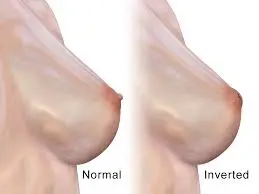
Breast anatomy varies significantly from person to person, and many differences that people notice in themselves are completely normal variations rather than medical problems. One variation that often causes concern, confusion, or self-consciousness is the presence of inverted nipples.
For some individuals, nipple inversion has been present since puberty and never caused any problems. Others may notice changes later in life, leading to questions about whether these changes are normal or require medical evaluation. Because the nipple plays both a functional and aesthetic role, changes in its position can affect body image, breastfeeding concerns, clothing choices, and overall confidence.
Understanding why inverted nipples occur requires looking beyond appearance alone. The nipple position is influenced by breast tissue, milk ducts, connective structures, skin support, and underlying anatomy. This is why proper assessment focuses not only on appearance but also on function and tissue behavior.
With more than three decades of experience in breast and reconstructive procedures, Dr. Mohan Rangaswamy approaches nipple concerns through detailed anatomical assessment, focusing on both structure and function to create individualized treatment recommendations.
What Are Inverted Nipples?
Inverted nipples occur when the nipple points inward toward the breast instead of projecting outward. This happens because internal structures beneath the nipple pull it inward or prevent normal outward projection. The degree of inversion varies significantly. Some nipples remain inverted constantly, while others protrude temporarily with stimulation, temperature changes, or manual pressure.
Inverted nipples may affect:
- One breast or both breasts
- Men or women
- Adolescents or adults
- Individuals with naturally occurring anatomy or acquired changes
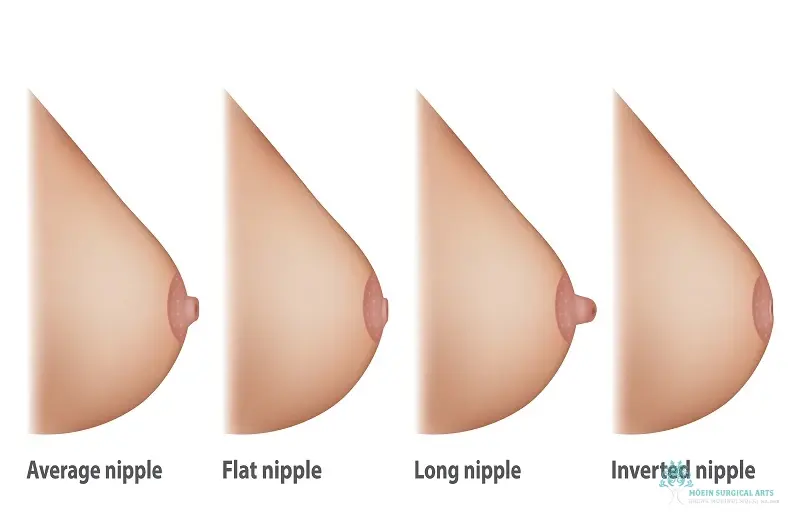
The condition is more common than many people realize and exists along a broad spectrum.
How Common Are Inverted Nipples?
Studies and clinical experience suggest nipple inversion is relatively common. Many individuals live with mild inversion for years without difficulty, while others seek evaluation because of:
- Cosmetic concerns
- Breastfeeding difficulties
- Hygiene issues
- Recent anatomical changes
- Concerns regarding underlying breast conditions
Because mild forms often go unnoticed or unreported, the condition may be more common than expected.
Understanding Normal Nipple Anatomy
To understand inversion, it helps to understand how the nipple normally projects. Nipple projection depends on:
- Milk ducts beneath the nipple
- Fibrous connective tissue support
- Surrounding breast tissue volume
- Skin elasticity
- Smooth muscle fibers within the nipple
When these structures become shortened, tight, tethered, or anatomically different, inward pulling may occur.
Types of Inverted Nipples
Not all nipple inversion behaves the same way. Understanding the type and severity helps determine whether treatment is necessary.
Mild Inversion
In mild cases:
- Nipples occasionally project outward
- Manual stimulation may temporarily correct inversion
- Function is usually preserved
Many individuals with mild inversion do not require treatment.
Moderate Inversion
Moderate cases may involve:
- Frequent inward positioning
- Temporary correction with manipulation
- Greater difficulty maintaining projection
These cases sometimes create functional concerns.
Severe Inversion
Severe inversion often involves:
- Constant inward positioning
- Limited ability to manually evert the nipple
- Strong tethering beneath the surface
- More pronounced functional challenges
This type may require more extensive evaluation.
Why Do Inverted Nipples Occur?
Multiple factors contribute to nipple inversion.
Congenital Causes
Many individuals are born with inverted nipples or develop them during puberty. This commonly occurs because:
- Milk ducts are naturally shorter
- Fibrous bands are tighter
- Tissue support develops differently
Congenital inversion is often stable over time.
Genetic Factors
Breast anatomy frequently runs in families. Genetics may influence:
- Nipple structure
- Breast tissue development
- Connective tissue characteristics
This explains why inversion sometimes appears across generations.
Breastfeeding and Pregnancy Changes
Pregnancy creates substantial changes within breast tissue. These changes include:
- Expansion of glandular tissue
- Stretching of surrounding structures
- Hormonal shifts
Following pregnancy or breastfeeding, tissue remodeling occasionally changes nipple position.
Aging and Tissue Changes
As tissues age:
- Skin elasticity decreases
- Structural support weakens
- Breast tissue distribution changes
Although aging alone does not always cause inversion, it may contribute in certain individuals.
Scar Tissue and Previous Procedures
Past surgery, trauma, or inflammation can sometimes alter nipple anatomy. Scar formation may create:
- Tightening beneath the nipple
- Tissue contraction
- Restricted projection
When Sudden Nipple Inversion Requires Attention
A nipple that has always been inverted is different from a nipple that suddenly changes. Medical assessment becomes important when inversion develops:
- Suddenly
- On one side only
- Alongside skin changes
- With discharge
- With pain or lumps
A new change in nipple position deserves evaluation to identify the underlying cause.
Functional Concerns Associated With Inverted Nipples
Not all individuals experience symptoms. However, some concerns include:
Breastfeeding Difficulties
More significant inversion may make latching difficult for infants.
Hygiene Challenges
Deep inversion can occasionally trap moisture or debris.
Irritation or Sensitivity
Some individuals experience discomfort because of friction or trapped moisture.
Emotional and Confidence Concerns
Body image concerns are common, especially when inversion affects clothing choices or intimacy.
How Inverted Nipples Are Evaluated
Assessment typically involves examining:
- Severity of inversion
- Breast symmetry
- Nipple mobility
- Skin quality
- Underlying tissue support
- Functional concerns
Dr. Mohan Rangaswamy emphasizes individualized assessment because the same treatment does not suit every degree of inversion.
Non-Surgical Management Options
Mild cases sometimes improve without surgery. Conservative approaches may include:
- Observation
- Temporary suction devices
- Breastfeeding support techniques
- Monitoring anatomical changes over time
Not every patient requires intervention.
Surgical Treatment Approaches for Inverted Nipples
When correction is considered, planning depends on anatomy and severity. The objectives generally include:
- Restoring outward projection
- Maintaining symmetry
- Preserving sensation where possible
- Supporting long-term stability
Technique selection depends on tissue structure rather than using one standard approach for everyone.
The Importance of Preserving Function
Nipple anatomy serves both cosmetic and functional purposes. Careful planning considers:
- Future breastfeeding goals
- Sensation preservation
- Blood supply maintenance
- Long-term tissue support
Balancing these factors requires experience with breast anatomy and reconstructive principles.
Why Individualized Planning Matters
No two cases of inverted nipples are identical. Important variables include:
- Degree of inversion
- Breast anatomy
- Tissue quality
- Pregnancy history
- Skin elasticity
- Patient priorities
This is why treatment decisions should always be individualized rather than standardized.
Dr. Mohan’s Approach to Nipple and Breast Anatomy
With over 30 years of surgical experience, Dr. Mohan Rangaswamy approaches nipple inversion through careful anatomical assessment and reconstructive principles. His evaluation focuses on:
- Structural causes of inversion
- Functional considerations
- Tissue quality
- Long-term stability
- Natural proportion and symmetry
Rather than focusing solely on appearance, the emphasis remains on restoring balance while respecting natural anatomy and individual goals.
Conclusion
Inverted nipples are a common anatomical variation that may be present from birth or develop later in life due to structural or tissue changes. While many cases are harmless and stable, new or sudden changes should always be evaluated carefully.
Understanding the underlying anatomy helps individuals make informed decisions about treatment options and expectations. Because nipple position is influenced by multiple layers of breast structure, successful management depends on individualized assessment rather than generalized solutions.
With extensive experience in breast and reconstructive surgery, Dr. Mohan Rangaswamy approaches nipple concerns with attention to anatomy, function, and natural outcomes.